Old Tamil Poetry

Translations of Tamil Poetic works that span 2000 years

Archive for the category “Sangam”

Kurunthokai – 18

Her friend says:

O’ Lord from the hills, where bamboo stalks
fence trees that have jackfruits growing in roots,
find an auspicious time to marry her soon;
who else knows her plight?
Like a small twig in which a huge fruit hangs,
her life is tenuous, but her love, immense!

தோழி கூற்று:

வேரல் வேலி வேர்கோட் பலவின்
சார னாட செவ்வியை யாகுமதி
யாரஃ தறிந்திசி னோரே சாரற்
சிறுகோட்டுப் பெரும்பழந் தூங்கி யாங்கிவள்
உயிர்தவச் சிறிது காமமோ பெரிதே!

This is another of Kapilar’s marvellous poems. After their usual tryst at night, he starts to go to his town. Her friend stops him and advices him that this nightly visits cannot continue forever. He has to marry her soon. Let’s first look at the last four lines of the poem. “Please find an auspicious time and marry her soon. Other than you, no one knows her plight. The passion she has for you is immense. Her life cannot carry such a burden for long.” The simile she uses is a huge ripening jack fruit hanging on a small twig. The twig cannot bear the fruit’s weight and the fruit may fall anytime and burst open, of use to no one. Similarly her passion is weighing on her life and she can’t bear it for ever. So marry her soon.
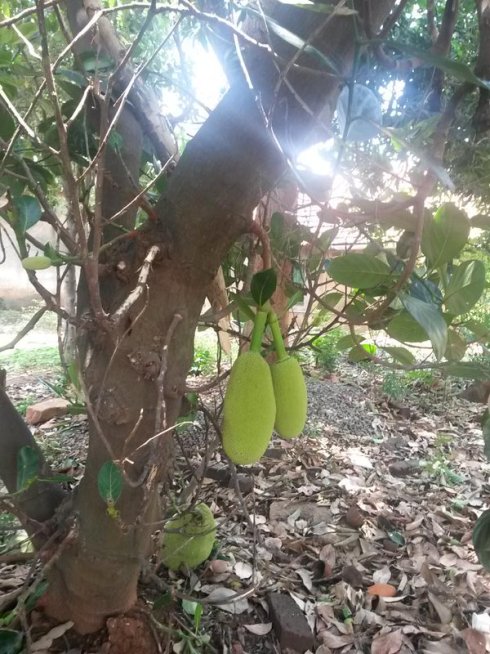
jackfruit.jpg

Jackfruit tree in my ancestral house. Fruits in both branches and roots.

Now to the first two lines. Her friend describes his hills as where jackfruits grow in roots underground. They are in no danger of falling down and bursting open. She implies “you don’t understand the plight of your lover. Jackfruits in your country are safe from falling down and are fenced with bamboo stalks so are in no danger of being stolen. But your lover’s status is like a huge jackfruit hanging in a branch, visible to all. It may either fall down or be stolen away. So act fast”

The last line ”இவள் உயிர் தவச் சிறிது, காமமோ பெரிது” portrays the burden of love beautifully. It is one of the most beautiful phrases ever in Tamil. Translating that is a tough ask. I have settled on “her life is tenuous but her love, immense”.

Also while describing the simile Kapilar uses “சாரல் சிறுகோட்டுப் பெரும்பழம்” which literally is “Huge fruits in small twigs in (trees that grow in) mountain slopes”. I wasn’t able to bring the slopes within the structure of the poem. Hence I have skipped it.
Kurunthokai – 27

Like a fine cow’s sweet milk spilt on ground
neither sating its calf
nor milked in a pot,
my pale pudendum and dusky beauty
neither useful to me
nor satisfying my lord,
are left for love sickness to devour.

கன்றும் உண்ணாது, கலத்தினும் படாது,
நல் ஆன் தீம் பால் நிலத்து உக்காஅங்கு,
எனக்கும் ஆகாது, என்னைக்கும் உதவாது,
பசலை உணீஇயர் வேண்டும்-
திதலை அல்குல் என் மாமைக் கவினே

This is a well known poem in Kurunthokai. Written by Velli Veethiyaar, one of the few women poets in Sangam literature, this talks about a girl pining for her lover. They have separated and he has gone away (some commentators say she is widowed). She cannot forget him and because of that her beauty is losing its sheen. She equates that to a cow’s milk that is not drunk by its calf nor collected in a pot, spilling on the ground and going waste. An arresting simile.

Many translations and commentaries skip the word அல்குல் – pudendum / vulva. Based on context it either means pudendum or hip. In this poem it is clear that it is pudenda. I too thought of using an euphemism or skipping it altogether, but finally decided to stick to the original.

Puranaanooru – 94

Like an elephant that reclines at the river front
for town children to wash its white tusk,
O Noble one, you are pleasant to us;
but like a tusker that is uncontrollable when in musth,
O Noble one, you are misery incarnate to your enemies!

ஊர்க்குறு மாக்கள் வெண்கோடு கழாஅலின்
நீர்த்துறை படியும் பெருங்களிறு போல
இனியை பெரும வெமக்கே மற்றதன்
துன்னருங் கடாஅம் போல
இன்னாய் பெருமநின் னொன்னா தோர்க்கே.

Poet Avvayar wrote this poem in praise of Adhiyaman, the chief of Thagadoor (present day Dharmapuri in Tamil Nadu). She says that to those who are under his patronage, he is pleasant. But to his opponents, he is a tormentor. She uses the simile of an elephant that is pleasant to kids playing with it, but becomes uncontrollable when it is musth (மதம் பிடித்த யானை).

In the original poem, she uses two words for the elephant – களிறு when pleasant and கடாஅம் when in musth. I have tried to replicate that with the use of ‘elephant’ and ‘tusker’ in the translation. Also musth is not explicity mentioned in the original. துன் அரும் – un approachable. When an elephant is in musth, it is aggressive and no one can go near it. I have made it explicit in the translation.

Kurunthokai – 290

Those who advice me to endure the pain of love,
do they even know about it? Are they so strong?
As for me, if I don’t see my lover,
with my heart swelling in grief,
like a spray of foam
dashing on rocks in high tide,
bit by bit I cease to exist.

‘காமம் தாங்குமதி’ என்போர்தாம் அஃது
அறியலர்கொல்லோ? அனை மதுகையர் கொல்?
யாம், எம் காதலர்க் காணேம்ஆயின்,
செறிதுனி பெருகிய நெஞ்சமொடு, பெருநீர்க்
கல் பொரு சிறு நுரை போல,
மெல்லமெல்ல இல்லாகுதுமே.

This Kurunthokai poem is about a girl pining for her lover. He hasn’t come to see her in a long time. Her friend asks her to be strong and bear the pain. In reply she says “those who talk about  enduring the pain know nothing about it. May be they think they are strong. But I am not. If I don’t see him soon, I will pass away  due to my grief”.

The simile used in this poem is remarkable. In high tide, the foaming waves dash on rocks and slowly dissipate and vanish. She says she too will cease to exist like that foam.

பெருநீர் is explained as great floods by U Ve Saminatha Iyer. Others too have followed the same meaning. However I think it makes sense as waves in high tide. This poem is in நெய்தல் திணை(the coastal landscape), where waves make more sense as a simile. பெருநீர் also means ocean. Hence I have taken பெருநீர் as high tide.


Kurunthokai – 102

If I think of him, my heart aches;
to not think of him, is beyond me;
my love pains me and grows sky high;
the man I love, is not a honorable guy.

உள்ளின், உள்ளம் வேமே; உள்ளாது
இருப்பின், எம் அளவைத்து அன்றே; வருத்தி
வான் தோய்வற்றே, காமம்;
சான்றோர் அல்லர், யாம் மரீஇயோரே.

Poem written by Avvayar. Her lover hasn’t come to see her in a long time. She is lovelorn. Her friend asks her not to fret. This is her answer to her friend. “I can’t think of him, I can’t not think of him. My love sickness grows by the day. But he hasn’t come as he promised. He isn’t some one who keeps his words.”

In the first sentence வேமே – வேகுமே – is normally translated as ‘burns’. I have used ‘ache’ as it fits better than burns here. வே also means distress according to Chennai University dictionary.

Kurunthokai – 43

Thinking “he won’t go” I was aloof;
thinking “she won’t agree” he was aloof too;
our big egos led us to bicker then;
my pained heart wallows in misery now,
as if from a Cobra’s sting.

”செல்வார் அல்லர்” என்று யான் இகழ்ந்தனனே;
”ஒல்வாள் அல்லள்” என்று அவர் இகழ்ந்தனரே:
ஆயிடை, இரு பேர் ஆண்மை செய்த பூசல்,
நல்அராக் கதுவியாங்கு, என்
அல்லல் நெஞ்சம் அலமலக்குறுமே.

This poem was written by Avvaiyaar, the leading poetess of Tamil Literature. Written 2000 years ago, it is as relevant today as it was then. This poem is a lament of how we let our egos erect walls in a relationship.

She thought he won’t go. So she kept quiet and didn’t ask him not to go. He thought that if he told her, she won’t let him go. So he kept quiet and didn’t tell her that he was going away. They both did not do what was needed to keep the relationship. This cold war naturally led to a tiff and he left. She laments  “because of our egos both of us bickered and now my heart suffers as if stung by a Cobra”. Why does she compare the pain of separation to a snake bite? A snake bite pains till one’s death. Similarly this pain of his going away will not alleviate till her death.

நல் அரா – Cobra / snake
கதுவு – grip ( a Cobra stings and holds on to the victim)
அலம் – misery
அலக்கு – move about (wallow)

Puranaanooru – 107

“Pari’s this, Pari’s that” hyping his worth,
eloquent poets praise him much.
Pari is not the only one such,
monsoon too is here to nurture this earth.

பாரி பாரி யென்றுபல வேத்தி
ஒருவற் புகழ்வர் செந்நாப் புலவர்
பாரி யொருவனு மல்லன்
மாரியு முண்டீண் டுலகுபுரப் பதுவே.

Seeing the poets praise Pari for his benevolence, Kapilar says he is not the only benefactor. Monsoon too gives its bounty to nurture this earth.

This poem is an example of praising one by seeming to put him down (பழித்ததுபோலப் புகழ்ந்தவாறு). What’s implied is that no mortal can be compared to Pari for his generosity. Like how the rain doesn’t differentiate between recipients but nurtures all, so does Pari. Check the previous poem Puranaanooru – 106 for how Pari doesn’t differentiate between supplicants.

Puranaanooru – 106

Even if a bunch of crown flowers,
neither considered suitable nor otherwise,
are offered, God doesn’t refuse; similarly,
even if the base and naive beseech him,
Pari still obliges with his generosity.

நல்லவுந் தீயவு மல்ல குவியிணர்ப்
புல்லிலை யெருக்க மாயினு முடையவை
கடவுள் பேணே மென்னா வாங்கு
மடவர் மெல்லியர் செல்லினும்
கடவன் பாரி கைவண் மையே.

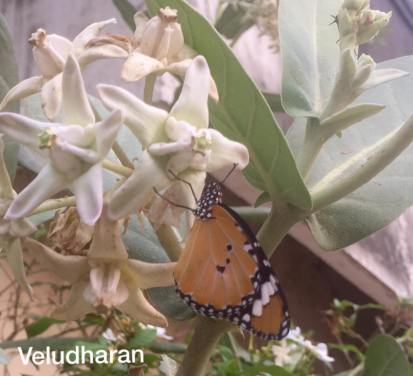
God accepts everything that a devotee offers him. Some flowers are considered suitable as offering to the Gods, some are considered unsuitable.The odorless Crown flower (எருக்கம் பூ) is neither of these. But even if that is offered, God doesn’t say no. Similarly even if the supplicants are base and naive, still Pari is benevolent to them, because he considers it his duty to be so.

புல்லிலை எருக்கம் – Crown flower with faded leaves. I had to skip the faded leaves part  of it in the translation for better readability.

நல்லவுந்தீயவும் அல்ல – neither good nor bad.

12957528_1059262994130284_4126823918885392624_o

Pic: twitter.com/veludharan


Puranaanooru – 105

O’ bright faced dancer! Whether it rains,
for raindrops to soak fresh blue lilies
blooming near the pond and swarmed by bees,
or not, water falls down from the peaks
of rising hills dotted with bamboo stalks
to course through horse gram fields;
sweeter than those waters, is Chief Pari;
If you go sing his praise, you’ll receive jewels of Ruby.

சேயிழை பெறுகுவை வாள் நுதல் விறலி!
தடவு வாய்க் கலித்த மா இதழ்க் குவளை
வண்டு படு புது மலர்த் தண் சிதர் கலாவப்
பெய்யினும், பெய்யாது ஆயினும், அருவி
கொள் உழு வியன் புலத்துழை கால் ஆக,
மால்புடை நெடு வரைக் கோடுதோறு இழிதரும்
நீரினும் இனிய சாயல்
பாரி வேள்பால் பாடினை செலினே.

Poet Kapilar advises a dancer who is facing difficulty, to go to Chief Pari’s court and get gifts. Irrespective of whether it rains or not, there’s abundant water in King Pari’s hills. He is even more sweeter than that water. So you go and sing his praise and you will be gifted with red jewels. Abundance of water irrespective of rains is a metaphor for his generosity irrespective of his position. Bees swarming the freshly bloomed flower is a metaphor for supplicants crowding the benefactor.

வாணுதல் விறலி – dancer with bright forehead. This is a recurring description in Sangam poetry. I have used bright faced to make it easier to comprehend. சேயிழை –  red jewels. I used Ruby for red.

Sangam anthology poems are perfect in themselves as stand alone poems. At the same time they are strung together to form an intricate design as a whole. Take the case of Poet Kapilar and Chief Pari. Out of the 2381 Sangam poems available today, Kapilar has written 235 poems. His friend ship with the benevolent hill country chieftain Pari is legendary.

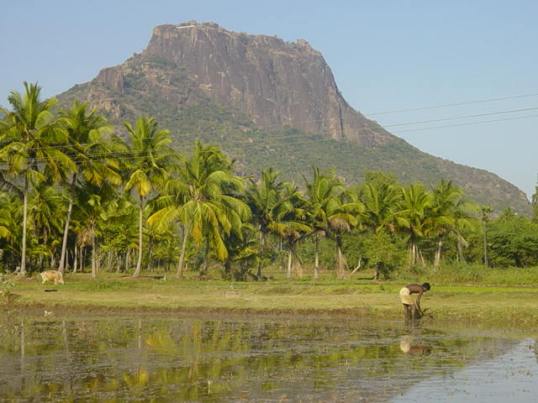
Parambu Malai

Pari ruled the hill country Parambu Nadu (பறம்பு நாடு, called Pranmalai today, near Singampunari Village in Sivagangai District) around 200 AD. He was a well known benefactor and patron for many poets. His prosperity attracted the attention of his contemporaries. Chera, Chola and Pandya kings attacked him at the same time. He fought valiantly but died in battle. Kapilar took charge of his two daughters and tried to get them married. Failing in his efforts, he left them under the custody of priests and starved to death. Poet Avvayar later got Pari’s daughter married to Malayaman Thirumudik Kari.

Puranaanooru poems 105- 120 by Kapilar are about these events. Reading them together is like reading a novella. I plan to translate these poems in order for the next few days.

Kurunthokai – 3

Larger than the earth, loftier than the sky,
lot more deeper than the ocean,
is my love for the man from the hillside,
where copious honey is drawn
from dark stemmed Kurinchi flowers.

நிலத்தினும் பெரிதே வானினு முயர்ந்தன்று
நீரினு மாரள வின்றே சாரற்
கருங்கோற் குறிஞ்சிப் பூக்கொண்டு
பெருந்தே னிழைக்கு நாடனொடு நட்பே.


Neelakurinji
Kurinchi flower  (pic:www.munnartourguide.com)


This is a well known poem from Kurunthokai (Kuru – short, Thokai – anthology. Anthology of 400 short poems). He is waiting for her. Her friend thinks that this clandestine relationship is going nowhere and chastises her. She replies saying my love for him is larger than the earth, loftier than the sky and deeper than the ocean. Bees drawing honey out of flowers in the hillside is a metaphor for their intimacy in the hillside. She indicates to her friend that their love has been consummated.

Kurinchi flowers bloom once in 12 years. (They last bloomed in Nilgiris in 2006). Honey from them is rare to obtain and sweeter. The poet uses it with the  adjective great – பெருந்தேன் (great honey). I have used copious. Bees are not explicitly mentioned in the original poem but implied. I have maintained the same in translation.

These lines written 2000 years ago, reminds one of Elizabeth Barrett Browning’s lines “I love thee to the depth and breadth and height / my soul can reach” from her “How do I love thee” sonnet. Similar lines are also found in Petula Clark’s 1960s song My Love “My love is warmer than the warmest sunshine / Softer than a sigh / My love is deeper than the deepest ocean/Wider than the sky.”

Post Navigation