Old Tamil Poetry

Translations of Tamil Poetic works that span 2000 years

Archive for the category “Uncategorized”

Ainkurunooru – 203

May you live long my dear, listen! Sweeter than
milk mixed with honey from our gardens
is the muddled water leftover by deer
in his country’s foliage covered puddles.

அன்னாய், வாழி! வேண்டு, அன்னை! நம் படப்பைத்
தேன் மயங்கு பாலினும் இனிய அவர் நாட்டு
உவலைக் கூவல் கீழ
மான் உண்டு எஞ்சிய கலிழி நீரே.

She has come back after meeting her lover who lives in hill country. Her friend asks “Water quality is bad in his country. How did you manage?” She replies “The muddled water in the foliage covered puddles there was sweeter than milk sweetened with honey”. Her love for him makes her over look these minor hiccups. Love is not only blind, but also numbs the tastebuds :-).

Thirukkural – 1291

His heart does his bidding, you see –
then why are you, my heart, against me?

அவர்நெஞ்சு அவர்க்காதல் கண்டும் எவன்நெஞ்சே

நீஎமக்கு ஆகா தது.

அவர் நெஞ்சு அவர்க்கு ஆதல் கண்டும், எவன்,-நெஞ்சே!-
நீ எமக்கு ஆகாதது?

He hasn’t come back as promised. She is angry with him. But the love in her heart overpowers the anger. So she chides her heart “When he can be stone hearted to be away from me and his heart acts accordingly, why do you not listen to me, but pine for him?” She is torn between love and anger. So she treats her heart as an entity separate from herself.

Manimekalai – Sirai Vidu Kaathai 73-80

Do you cry for his body or for his soul?
If you cry for his body, who was it (but you)
that consigned your son’s body to cemetery?
If you cry for his soul, where it is headed  
is hard to know as that’s decided by destiny.
If that soul is dear to you, my lady,
you should grieve for all souls.

உடற்குஅழு தனையோ உயிர்க்குஅழு தனையோ     
உடற்குஅழு தனையேல் உன்மகன் தன்னை     
எடுத்துப் புறங்காட்டு இட்டனர் யாரே
உயிர்க்குஅழு தனையேல் உயிர்புகும் புக்கில்     
செயப்பாட்டு வினையால் தெரிந்துஉணர்வு அரியது     
அவ்வுயிர்க்கு அன்பினை ஆயின் ஆய்தொடி     
எவ்வுயிர்க்கு ஆயினும் இரங்கல் வேண்டும்

Manimekalai is one of the five great epics of Tamil literature. It is a Buddhist epic. The protagonist Manimekalai is the daughter of Madhavi, one of the central characters of the epic Silappathikaaram. Hence Silappathikaaram and Manimekalai are considered as twin epics. Manimekalai is dated between 300-600 CE.

The Chola King Udhayakumaran falls madly in love with Manimekalai. But she wants to be a Buddhist nun. To escape his clutches she transforms herself into another woman , Kaayasandikai. When the King realises that it is Manimekalai in another form, the pursues her again. The real Kaayasandikai’s husband Kanchanan  mistakes this and kills the King. The King’s mother wants to take revenge on Manimekalai for her son’s death. She tries to torture Manimekalai, but all her efforts fail. She realises that she has failed and falls at Manimekalai’s feet.

This poem is Manimekalai assuaging the pain of King’s mother. She says, “Do you cry for your son’s body or soul. If you cry for his body, it was you who consigned his dead body to the graveyard, not me. If you cry for his soul, it is hard to know what form his soul will take in next birth as it is decided only by his deeds in previous birth (karma/fate). So my dear lady, if you love your son’s soul, you should grieve and empathise with all souls in this universe”

The last two lines make this poem universal.
அவ்வுயிர்க்கு அன்பினை ஆயின் …எவ்வுயிர்க்கு ஆயினும் இரங்கல் வேண்டும் – If that soul is dear to you, you should grieve for all souls.

This poem also explains the Buddhist philosophy of rebirth. You can read the wiki here
Thirukkural – 302


Anger where one is powerless is bad; where
one is powerful, it is even worse.

செல்லா இடத்துச் சினம் தீது; செல் இடத்தும்,
இல், அதனின் தீய பிற.

Anger destroys a man. Showing anger against a stronger opponent is bad news. It will be disastrous for you in this world. Showing anger against the meek is even worse. Showing your anger against those who can’t fight back destroys the humanity in man kind. It will make one suffer in afterlife too.

Kambaramayanam – 6443

As He – who’s so distant that even Brahma can’t find – laughed,
wise Prahaladan who’d proclaimed, “I’ll find and show Him”,
danced; sobbed; sang excitedly; raised hands over his head;
fell at His feet; ran around, stomped the earth and jumped.

“நாடி நான் தருவென் “ என்ற  நல் அறிவாளன், நாளும்
தேடி நான்முகனும் காணாச்  சேயவன் சிரித்தலோடும்,
ஆடினான்; அழுதான்; பாடி  அரற்றினான்; சிரத்தில் செங்கை
சூடினான்; தொழுதான்; ஓடி  உலகெலாம் துகைத்தான், துள்ளி.

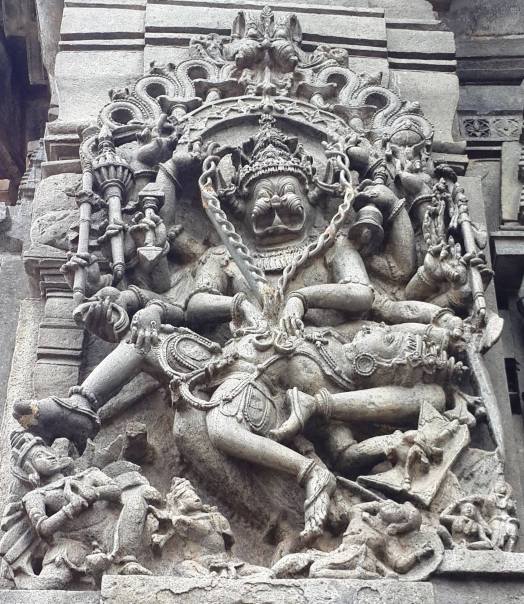
As Narasimha (half man, half lion) appeared in the pillar Hiranyan broke, Prahaladan was overtaken by excitement. He ran around, danced, sobbed, and jumped up and down.

12028650_10156085471570291_2227368249974402851_o

Narasimha slaying Hiranyan. Prahaladan is at left hand bottom corner. At Belur, Karnataka.

This is a sculpture of Narasimha slaying Hiranyan, in Belur Temple (Karnataka). You can see Prahaladan praying at the left hand side bottom corner.

Post Navigation