Old Tamil Poetry

Translations of Tamil Poetic works that span 2000 years

Valaiyaapathi – 3

You adore the dark hued, glossy, flower decked,
beautified tresses of women, my heart!
Beautified tresses and shaped hair buns
will burn in funeral pyres one day, my heart!
Though you’ve seen them burn in funeral pyres
why do you still hanker after them, my heart!

நீல நிறத்தனவாய் நெய்கனிந்து போதவிழ்ந்து
கோலம் குயின்ற குழல்வாழி நெஞ்சே
கோலங் குயின்ற குழலுங் கொழுஞ் சிகையுங்
காலக் கனலெரியின் வேம்வாழி நெஞ்சே
காலக் கனலெரியின் வேவன கண்டாலுஞ்
சால மயங்குவ தென்வாழி நெஞ்சே.

Valaiyaapathi, written in 9th Century AD is one of the five great epics in Tamil Literature. Only 72 verses of Valaiyaapathi are available now and from these it is difficult to ascertain the story of the epic. Based on the content of these verses, it has been concluded that this a Tamil Jain literature. Tamil Nadu had dominant Jain presence for nearly thousand years from 4th Century BC to 8th Century AD. It declined with the revival of Shaivism in 8th C AD.

This verse talks about temporary nature of worldly pleasures. Jain monks naturally advocated an ascetic lifestyle.

Kurunthokai – 18

Her friend says:

O’ Lord from the hills, where bamboo stalks
fence trees that have jackfruits growing in roots,
find an auspicious time to marry her soon;
who else knows her plight?
Like a small twig in which a huge fruit hangs,
her life is tenuous, but her love, immense!

தோழி கூற்று:

வேரல் வேலி வேர்கோட் பலவின்
சார னாட செவ்வியை யாகுமதி
யாரஃ தறிந்திசி னோரே சாரற்
சிறுகோட்டுப் பெரும்பழந் தூங்கி யாங்கிவள்
உயிர்தவச் சிறிது காமமோ பெரிதே!

This is another of Kapilar’s marvellous poems. After their usual tryst at night, he starts to go to his town. Her friend stops him and advices him that this nightly visits cannot continue forever. He has to marry her soon. Let’s first look at the last four lines of the poem. “Please find an auspicious time and marry her soon. Other than you, no one knows her plight. The passion she has for you is immense. Her life cannot carry such a burden for long.” The simile she uses is a huge ripening jack fruit hanging on a small twig. The twig cannot bear the fruit’s weight and the fruit may fall anytime and burst open, of use to no one. Similarly her passion is weighing on her life and she can’t bear it for ever. So marry her soon.

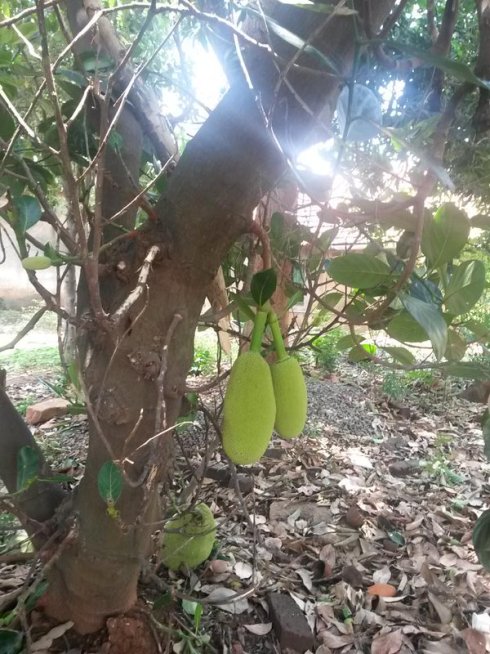
jackfruit.jpg

Jackfruit tree in my ancestral house. Fruits in both branches and roots.

Now to the first two lines. Her friend describes his hills as where jackfruits grow in roots underground. They are in no danger of falling down and bursting open. She implies “you don’t understand the plight of your lover. Jackfruits in your country are safe from falling down and are fenced with bamboo stalks so are in no danger of being stolen. But your lover’s status is like a huge jackfruit hanging in a branch, visible to all. It may either fall down or be stolen away. So act fast”

The last line ”இவள் உயிர் தவச் சிறிது, காமமோ பெரிது” portrays the burden of love beautifully. It is one of the most beautiful phrases ever in Tamil. Translating that is a tough ask. I have settled on “her life is tenuous but her love, immense”.

Also while describing the simile Kapilar uses “சாரல் சிறுகோட்டுப் பெரும்பழம்” which literally is “Huge fruits in small twigs in (trees that grow in) mountain slopes”. I wasn’t able to bring the slopes within the structure of the poem. Hence I have skipped it.

Kambaramayanam – 6443

As He – who’s so distant that even Brahma can’t find – laughed,
wise Prahaladan who’d proclaimed, “I’ll find and show Him”,
danced; sobbed; sang excitedly; raised hands over his head;
fell at His feet; ran around, stomped the earth and jumped.

“நாடி நான் தருவென் “ என்ற  நல் அறிவாளன், நாளும்
தேடி நான்முகனும் காணாச்  சேயவன் சிரித்தலோடும்,
ஆடினான்; அழுதான்; பாடி  அரற்றினான்; சிரத்தில் செங்கை
சூடினான்; தொழுதான்; ஓடி  உலகெலாம் துகைத்தான், துள்ளி.

As Narasimha (half man, half lion) appeared in the pillar Hiranyan broke, Prahaladan was overtaken by excitement. He ran around, danced, sobbed, and jumped up and down.

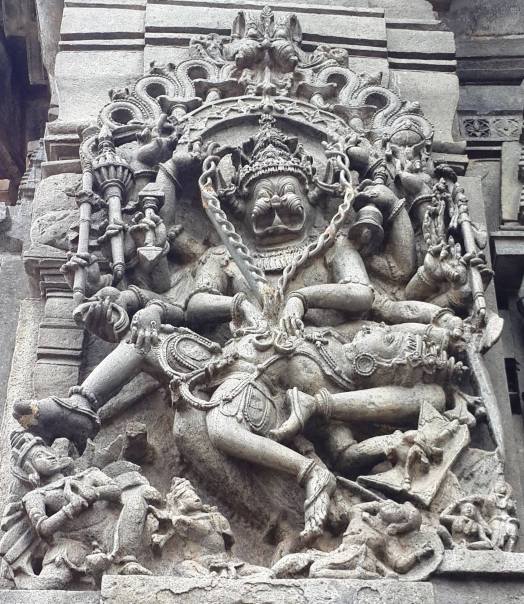
12028650_10156085471570291_2227368249974402851_o

Narasimha slaying Hiranyan. Prahaladan is at left hand bottom corner. At Belur, Karnataka.

This is a sculpture of Narasimha slaying Hiranyan, in Belur Temple (Karnataka). You can see Prahaladan praying at the left hand side bottom corner.

Kambaramayanam – 6439 – 6442

“He’s there in a saan*; He’s in a hundredth of an atom too;
He’s in the Meru** mountain; He’s in this pillar too;
He’s in the words you utter; you’ll see for yourself soon”
he said; derisively laughed his father, saying “Good,

The omnipresent one, whom only you and Devas pray to,
show him in this pillar; if you can’t show him here,
I’ll kill you like a mighty lion slaying a tusker,
drink your crimson blood, and eat your body too”

“My life isn’t easy for you to take; if He
doesn’t appear wherever you touch and see,
I’ll kill myself; if life is still cherished by me,”
replied the wise one, “I am not his devotee.”

Wishing to see Him, mockingly he said “well, well”,
and with his mighty hands slammed a nearby pillar
like a thunder strike; as it shattered in all directions, there
appeared the red eyed Lion, its roar making the world shudder.

* saan – a unit of measurement. Distance between tip of thumb and small finger when all fingers are spread out. Roughly 9 inches.

** Meru mountain – Mythical mountain thought to be the center of the Universe.

“‘சாணினும் உளன்; ஓர் தன்மை  அணுவினைச் சதகூறு இட்ட
கோணினும் உளன்; மாமேருக் குன்றினும் உளன்; இந் நின்ற
தூணினும் உளன்; நீ சொன்ன  சொல்லினும் உளன்; இத்தன்மை
காணுதி விரைவின் ‘என்றான்;‘நன்று எனக் கனகன் நக்கான்

‘உம்பர்க்கும் உனக்கும் ஒத்து, இவ் உலகு எங்கும் பரந்துளானை,
கம்பத்தின் வழியே காண, காட்டுதி; காட்டாய் ஆகில்,
கும்பத்திண் கரியைக் கோள்மாக் கொன்றென, நின்னைக் கொன்று உன்
செம்பு ஒத்த குருதி தேக்கி, உடலையும் தின்பென் ‘ என்றான்.

‘என் உயிர் நின்னால் கோறற்கு எளியது ஒன்று அன்று; யான் முன்
சொன்னவன் தொட்ட தொட்ட  இடந்தொறும் தோன்றான் ஆயின்,
என் உயிர் யானே மாய்ப்பல்; பின்னும் வாழ்வு உகப்பல் என்னின்,
அன்னவற்கு அடியேன் அல்லேன் ‘ என்றனன் அறிவின் மிக்கான்.

நசை திறந்து இலங்கப் பொங்கி, “நன்று, நன்று “ என்ன நக்கு,
விசை திறந்து உருமு வீழ்ந்தது என்ன ஓர் தூணின், வென்றி
இசை திறந்து உயர்ந்த கையால்  எற்றினான்; எற்றலோடும்,
திசை திறந்து அண்டம் கீறச் சிரித்தது, அச் செங்கண் சீயம்.

Slaying of Hiranyan is one of the dramatic sequences of Kamba Ramayanam. Hiranyan gets a boon from the Gods that he can be killed neither by a human nor an animal, he can be killed neither in the morning or in the night, neither in earth or on the sky. Because of this boon, he rules the world with an iron fist forcing everyone to accept himself as God. God’s name is not to be spoken anywhere. So Devas plead to Vishnu to kill Hiranyan. Hiranyan’s son Prahaladan is an ardent devotee of Vishnu. He refuses to chant Hiranyan’s name. So Hiranyan asks his soldiers to kill his own son. Due to Vishnu’s protection, Prahaladan doesn’t die whatever they do. This is the climax of that sequence.

Prahaladan says to Hiranyan, “Vishnu is everywhere in this world. You better pray to him and surrender”. Hiranyan laughs and says “if he is every where show him to me in this pillar. If not I will kill you, drink your blood and eat your dead body”. His hatred towards the Gods makes him to say such bone chilling words to his own son. Prahaladan too is no coward. He says “If Vishnu doesn’t appear where ever you touch, I will kill myself. I won’t be his devotee anymore”. Hiranyan smashes his hand on a pillar and there appears Narasimha, the avatar of Vishnu that is half man, half lion.

Kamban uses the inherent rhythm of Tamil language to build up the crescendo in this sequence of poems. If you can read Tamil, read it out loud. You’ll really love it. In the translation, I’ve used the capital H (He, Him) wherever God is spoken about.
Naanmanik Kadigai – 19

If husband is upset, his doe eyed wife is rattled;
if a scholar is upset, his learning is rattled;
if the ruled are upset, ruler is rattled;
if harp strings are upset, song is rattled.

பெற்றான் அதிர்ப்பின், பிணை அன்னாள்தான் அதிர்க்கும்;
கற்றான் அதிர்ப்பின், பொருள் அதிர்க்கும்; பற்றிய
மண் அதிர்ப்பின், மன்னவன் கோல் அதிர்க்கும்;
பண் அதிர்ப்பின், பாடல் அதிர்ந்துவிடும்.

Naanmanik Kadigai, is a collection of 101 poems written by Vilambi Naganar. This collection is considered to have been written at the same time as Silappathikaaram, around 2nd Century AD. All poems in this collection are advisory in nature. They contain 4 phrases connected by a common underlying meaning. Hence the name Naan (four) mani (gem) kadigai (fragment). Their meaning is direct and easily understood.

Kurunthokai – 27

Like a fine cow’s sweet milk spilt on ground
neither sating its calf
nor milked in a pot,
my pale pudendum and dusky beauty
neither useful to me
nor satisfying my lord,
are left for love sickness to devour.

கன்றும் உண்ணாது, கலத்தினும் படாது,
நல் ஆன் தீம் பால் நிலத்து உக்காஅங்கு,
எனக்கும் ஆகாது, என்னைக்கும் உதவாது,
பசலை உணீஇயர் வேண்டும்-
திதலை அல்குல் என் மாமைக் கவினே

This is a well known poem in Kurunthokai. Written by Velli Veethiyaar, one of the few women poets in Sangam literature, this talks about a girl pining for her lover. They have separated and he has gone away (some commentators say she is widowed). She cannot forget him and because of that her beauty is losing its sheen. She equates that to a cow’s milk that is not drunk by its calf nor collected in a pot, spilling on the ground and going waste. An arresting simile.

Many translations and commentaries skip the word அல்குல் – pudendum / vulva. Based on context it either means pudendum or hip. In this poem it is clear that it is pudenda. I too thought of using an euphemism or skipping it altogether, but finally decided to stick to the original.

Puranaanooru – 94

Like an elephant that reclines at the river front
for town children to wash its white tusk,
O Noble one, you are pleasant to us;
but like a tusker that is uncontrollable when in musth,
O Noble one, you are misery incarnate to your enemies!

ஊர்க்குறு மாக்கள் வெண்கோடு கழாஅலின்
நீர்த்துறை படியும் பெருங்களிறு போல
இனியை பெரும வெமக்கே மற்றதன்
துன்னருங் கடாஅம் போல
இன்னாய் பெருமநின் னொன்னா தோர்க்கே.

Poet Avvayar wrote this poem in praise of Adhiyaman, the chief of Thagadoor (present day Dharmapuri in Tamil Nadu). She says that to those who are under his patronage, he is pleasant. But to his opponents, he is a tormentor. She uses the simile of an elephant that is pleasant to kids playing with it, but becomes uncontrollable when it is musth (மதம் பிடித்த யானை).

In the original poem, she uses two words for the elephant – களிறு when pleasant and கடாஅம் when in musth. I have tried to replicate that with the use of ‘elephant’ and ‘tusker’ in the translation. Also musth is not explicity mentioned in the original. துன் அரும் – un approachable. When an elephant is in musth, it is aggressive and no one can go near it. I have made it explicit in the translation.

Naaladiyaar – 280

Earning is a pain; guarding the earned wealth
Is even more of a pain;
It’s a pain if it erodes or guards fail;
Wealth is a repository of pain.

ஈட்டலுந் துன்பமற் றீட்டிய வொண்பொருளைக்
காத்தலும் ஆங்கே கடுந்துன்பம் – காத்தல்
குறைபடில் துன்பம் கெடில்துன்பம் துன்பக்கு
உறைபதி மற்றைப் பொருள்.

This Naaladiyaar poem is under the chapter “Not donating” (ஈயாமை). To earn wealth one undergoes much pain. But one cannot rest easy after earning wealth. To guard the earned wealth is painful. One has to be watchful about it. If the wealth erodes or the safeguards fail, it causes pain too. Wealth is nothing but a repository of misery. The poet asks why go to such hassles to save wealth instead of distributing it. Not surprising since Naaladiyaar is an anthology of poems by Jain monks.

ஈட்டல் – earn

துன்பம் – pain / misery

ஒண்பொருள் – great wealth

காத்தல் – To guard

குறை படில் – if (safeguards) fail

கெடில் – goes bad / erodes

உறைபதி – residing place / repository

Thirukkural – 1114

If lilies could see, they’ll droop, convinced
‘we’re no match to this bedecked girl’s eyes’

காணின், குவளை கவிழ்ந்து நிலன் நோக்கும்-
‘மாணிழை கண் ஒவ்வேம்!’ என்று.

If Lily flowers could see, they will droop down saying we are no match to this beautiful jewel wearing girl’s eyes. Purple lily buds (குவளை மொட்டு) has been repeatedly used as a simile for eyes in Tamil literature. The picture below is of a trout lily bud.

காணின் – if (it) could see
குவளை – lily
மாணிழை – மாண் + இழை – glorious jewellery (wearing girl)
ஒவ்வேம் – ஒவ்வ மாட்டோம் – will not match

Kambaramayanam – 6427

Objects of the world differ from you,
are to their nature true, differ from each other too,
yet, do they differ from you –
do golden ornaments differ from Gold?

நின்னின் பிறிதாய் நிலையின் திரியா
தன்னின் பிறிது ஆயினதாம் எனினும்
உன்னின் பிறிது ஆயினவோ உலகம்?
பொன்னின் பிறிது ஆகில பொற்கலனே.

In Kambaramayanam, just before the battle between Rama and Ravana starts, Kamban places the story Hiranyan Vadhai Padalam (Slaying of Hiranya).  Hiranyan, whose powers make him believe that he is above all the Gods, wants his son Prahaladan to chant his name instead of God’s. Prahaladan refuses and an enraged Hiranyan orders Prahaladan to be killed.

This poem is Prahaladan praying to Lord Vishnu, as he is tied to a stone and thrown into the ocean. Prahaladan asks Vishnu, though all objects of this world are different from you, aren’t they all manifestations of you? Though  golden ornaments are of different shapes and sizes, aren’t they all still Gold?

This poem is one of the many gems in Kambaramayanam. With stunning brevity, Kamban brings out the drama and the philosophy while still adhering to the rules of poetry metre.

The commentaries call this as the Visishtadvaitha principle of Sarira Sariri bhava (body/in-dweller principle). I don’t know enough to explain this principle.

Post Navigation